
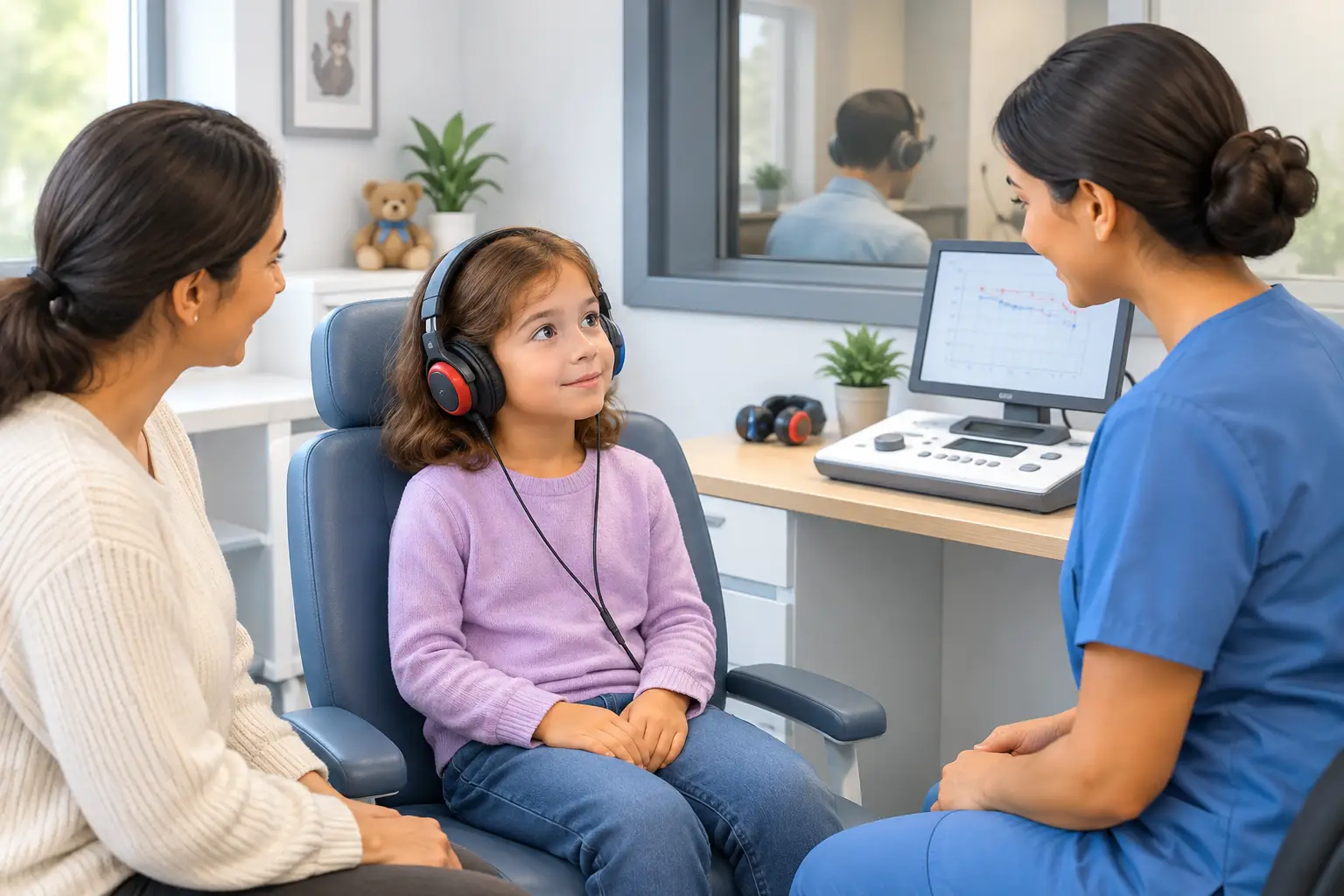
A child may hear some sounds perfectly well yet still miss parts of speech, particularly in a busy classroom, the back seat of a car or a lively family meal. Parents asking, “when should children have audiometry?” are often noticing these subtle changes rather than an obvious loss of hearing. A timely, age-appropriate hearing assessment can clarify what is happening and give families practical next steps.
When should children have audiometry?
Children should have audiometry when there is a concern about how they hear, listen, communicate or respond to sound. There is no need to wait for a child to say that they cannot hear clearly. Younger children may not have the words to explain the problem, and older children may adapt by watching faces, asking friends for help or withdrawing from situations where listening feels difficult.
A hearing assessment is also sensible after a failed or unclear hearing screen, when a parent, teacher or health professional has raised a concern, or when hearing appears to fluctuate. Recurrent ear infections, persistent congestion around the ears, a family history of childhood hearing difficulty and speech or language concerns can all make an expert assessment worthwhile. These signs do not always mean there is a lasting hearing problem, but they do deserve careful investigation rather than guesswork.
For babies, routine newborn hearing screening provides an early check, but it is not a lifetime guarantee. Hearing can change as a child grows, and some listening difficulties only become apparent when language, school and social demands increase. A child who passed a newborn screen can still benefit from audiometry later if concerns arise.
Signs that a hearing test could help
The clearest sign is a change from the child’s usual behaviour. Perhaps they have begun turning one ear towards the television, increasing the volume, mishearing instructions or seeming unusually tired after school. Listening takes effort when sound is unclear, and that effort can look like inattention, frustration or a lack of confidence.
Parents may notice that their child responds reliably in a quiet room but struggles when several people are talking. Teachers may report that the child misses spoken instructions, watches other pupils before starting a task, or finds phonics and group discussion harder than expected. None of these observations prove the cause, but together they provide useful information for a qualified audiologist.
Consider arranging a paediatric hearing assessment if your child:
- frequently says “what?” or asks for repetition
- does not respond consistently when called, especially from another room
- needs the television, tablet or music louder than others prefer
- has unclear speech, delayed language development or difficulty following conversation
- complains that sounds are muffled, blocked, uncomfortable or too loud
- has recurring ear-related symptoms or a noticeable change in hearing.
If hearing seems to have changed suddenly, or ear symptoms are causing significant discomfort, seek prompt medical advice. Audiometry is a valuable diagnostic tool, but the right route and timing should reflect the child’s symptoms.
Why timing matters at different ages
The goal is not simply to obtain a hearing result. It is to understand whether a child is getting the sound information they need for communication, learning and everyday confidence.
Babies and toddlers
In very young children, parents often notice changes first. A baby may startle to loud sounds but respond inconsistently to quieter voices. A toddler may use fewer words than expected, rely heavily on gestures or become upset when they cannot understand what has been said. It is easy to assume a child is distracted or developing at their own pace, but hearing should be considered as part of a wider picture.
Testing is adapted to developmental stage. Rather than expecting a toddler to press a button on command, an audiologist may use carefully structured responses to sound through play and observation. The experience should feel calm, encouraging and child-centred.
Pre-school children
Pre-school is often when listening demands increase. Children are expected to follow routines, understand stories, respond to their name in a busy room and interact with other children. A child may seem to hear at home but struggle at nursery, where distance and background noise make speech less clear.
At this age, play-based audiometry can be particularly effective. The child might complete a simple game each time they hear a sound, allowing the clinician to gather reliable information without making the appointment intimidating.
School-age children and teenagers
School-age children can usually take part in more conventional audiometry, often by responding when they hear tones through headphones or insert earphones. However, the assessment should still account for their experience beyond the test booth. A result in quiet may not fully explain why a pupil struggles in a noisy classroom, so the clinician will consider the concerns that brought the family to the appointment.
Teenagers may be reluctant to mention hearing difficulties, especially if they worry about standing out. They may instead describe headaches, concentration problems, tiredness or difficulty keeping up in social settings. A private, respectful conversation can make it easier for them to share what they have noticed.
What happens during paediatric audiometry?
A specialist paediatric hearing assessment begins with listening. Parents know their child best, so details about everyday responses, school feedback, ear history and communication development matter. The audiologist will explain the most suitable test approach based on the child’s age, attention and level of understanding.
Audiometry measures the quietest sounds a child can detect at different pitches. Depending on the assessment, this may involve sounds presented through headphones, soft speakers or a play activity. Other checks may assess how the eardrum is moving or whether the outer ear canal is clear. These complementary tests help build a fuller clinical picture.
A good appointment should not feel like a pass-or-fail exam. Children can be shy, tired, distracted or unwilling to wear headphones, particularly when they are very young. An experienced clinician will work at the child’s pace, use reassurance and adapt the method where possible. Occasionally, a further appointment is the best way to obtain dependable information. That is not a failure – it is a sensible clinical decision.
Audiometry after ear infections, wax or a cold
Temporary changes in hearing are common when the ears are affected by illness, fluid behind the eardrum or wax. Parents may wonder whether to test immediately or wait. The answer depends on the child’s symptoms, how long they have been present and the impact on daily life.
If hearing returns quickly as the child recovers, continued observation may be appropriate. If muffled hearing persists, the child keeps asking for repetition, or there is a pattern of recurring difficulty, assessment can provide clarity. Avoid trying to remove wax at home with cotton buds or other objects, as this can push material deeper or irritate the ear canal.
Where earwax is contributing to reduced hearing, it should be assessed and managed by an appropriately qualified clinician before or alongside hearing testing. Clear ear canals help ensure that audiometry results are as accurate as possible.
Preparing your child for a hearing assessment
Simple preparation can make the visit easier. Tell your child they will be meeting someone who checks how their ears hear different sounds. There is no need to over-explain or practise responses. Present it as a short game or activity, and avoid promising that nothing at all will feel unfamiliar – headphones and quiet test rooms can be new experiences.
Bring any relevant school feedback, previous hearing results and a note of what you have observed. Useful examples include when the difficulty occurs, whether one ear seems worse, and how long it has been happening. If possible, choose an appointment time when your child is usually rested and not hungry.
At Tragus-The Ear Specialists, paediatric assessments are led with clinical care and a clear focus on the child’s comfort. Our qualified audiologists help families understand the findings in plain language and discuss appropriate next steps based on the individual child, not a one-size-fits-all pathway.
Do not wait for a child to fall behind
Hearing is closely tied to language, relationships and participation. That does not mean every missed instruction or loud television points to a hearing difficulty. Children are busy, distracted and wonderfully selective listeners at times. But a pattern of concern is worth taking seriously, particularly when it affects communication, school or confidence.
An expert assessment offers reassurance where hearing is within expected limits and a clear plan where further support is needed. If something about your child’s listening no longer feels quite right, trust that observation and arrange a professional hearing check. Early clarity can make everyday conversations feel easier again.